The Work We Do
Cerebrovascular disease encompasses much more than strokes.
While diseases of the brain’s blood vessels are most often recognized when a person has a stroke, they also cause progressive decline in cognition, memory and gait as we age, as well as late-life depression. Preventing cerebrovascular disease therefore holds the hope of transforming the aging process and preserving our brain function as we age.
At the core of our work is a partnership with patients. Patients graciously contribute their time, share their medical histories, answer questionnaires, undergo neuroimaging, and donate blood and tissue samples.
We analyze all of our patients data to answer the following questions:
- Why are some of us more likely to suffer a stroke than others?
- Why, if we suffer a stroke, do some of us recover more fully than others?
- Why, after we suffer an initial stroke, are some of us at higher risk of a recurrent stroke than others?
- Why, after we suffer a stroke, are we and our loved ones at risk for developing depression, anxiety and post-traumatic stress and what can we do to reduce this risk?
The answers to these questions hold vital clues to finding effective ways to prevent stroke, to finding the new treatments our patients so desperately need, and to preserving brain health as we age.
Our laboratory is a pioneer in the investigation of genetics to answer these questions. Working in collaboration with the International Stroke Genetics Consortium, the Broad Institute, and scientists from across Boston and the world, we examine genetic information from tens of thousands of patients with and without stroke and seek to identify those genetic variants that alter human biology in such a way that risk of disease is increased, or recovery enhanced. As we discover these variants, we and our collaborators then determine the precise mechanisms through which they alter human biology. Opening a window onto the mysteries of human biology is the key to developing novel effective treatments.
What is stroke?
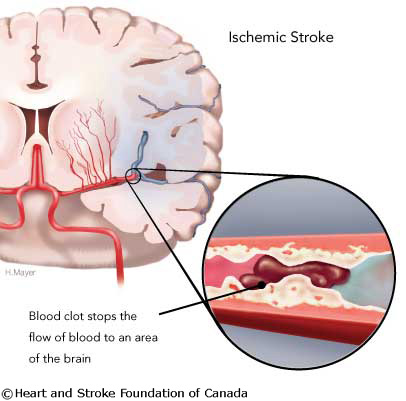
Stroke, also called brain attack, occurs when blood flow to the brain is disrupted. Disruption in blood flow is caused when either a blood clot blocks one of the vital blood vessels in the brain (ischemic stroke), or when a blood vessel in the brain bursts, spilling blood into surrounding tissues (hemorrhagic stroke).
The brain needs a constant supply of oxygen and nutrients in order to function. Even a brief interruption in blood supply can cause problems. Brain cells begin to die after just a few minutes without blood or oxygen. The area of dead cells in tissues is called an infarct. Due to both the physical and chemical changes that occur in the brain with stroke, damage can continue to occur for several days. This is called a stroke-in-evolution.
A loss of brain function occurs with brain cell death. This may include impaired movement, speech, thinking and memory, bowel and bladder control, eating, emotional control, and other vital body functions. Recovery from stroke and of the specific abilities affected is affected by the size and location of the region of the brain affected. A small stroke may result in problems such as weakness in an arm or leg. Larger strokes may cause paralysis (inability to move part of the body), loss of speech, or even death.
What are the different types of stroke?
Strokes can be classified into 2 main categories:
-
Ischemic strokes are caused by blockage of a blood vessel.
-
Hemorrhagic strokes are caused by bleeding from a ruptured vessel.